

WARNING! “I felt a pop in my knee.”
BY ALPINE PHYSIOTHERAPY
Here’s what every skiing knee injury victim needs to know about ACL injuries.
Did you hear or feel a pop? Is your knee swollen? Feeling unstable? Were you twisting or did you just feel your knee give way? If you have any of the above symptoms then there is a chance you have damaged your ACL. An ACL injury is every skiers worst nightmare. It generally means your season is over and for most people a year to 18 months of physiotherapy and rehabilitation. It is unfortunately one of the more common injuries we see up Cardrona and Treble Cone.
Your ACL is the main stabilising ligament in your knee connecting the femur (thigh) to the tibia (shin). It is usually torn when the knee twists inwards and the ligament is essentially caught in the femoral notch which ruptures it. The tearing is the popping feeling or sound. Swelling is usually very obvious and will occur within 24hrs. You commonly feel unstable if you continue to try to ski and can have pain or difficulty walking on it. ACL injuries commonly occur simultaneously with MCL and meniscus injuries – known as the Terrible Triad. As your knee twists in it damages the ligament on the inside of your knee as well as the “C shaped” meniscus that sit on the top of your tibia.
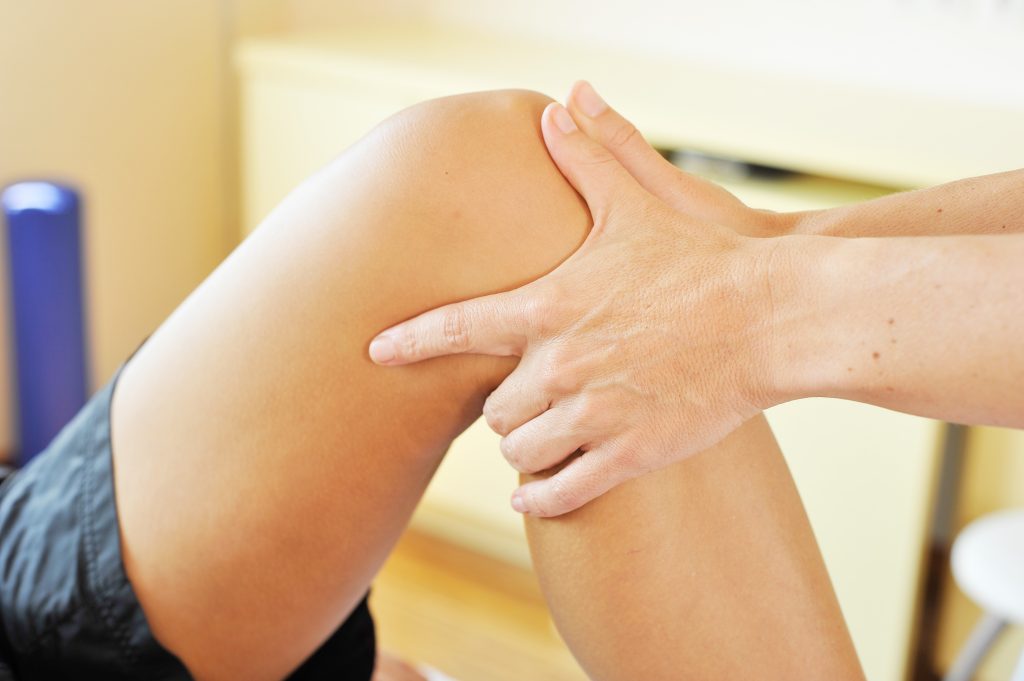
What happens next? Alpine Physiotherapy is the best physiotherapy practice in Wanaka to assess your knee. We use a range of specific tests to check if the ligament is damaged or loose. Depending on what else is damaged in your knee we may need to supply you with crutches or a brace. You do not need to go to a doctor first for a referral.
Your first physiotherapy session will involve a thorough assessment of all 4 ligaments in your knee, the joint, meniscus, bones and muscles surrounding the knee. We will then give you advice on knee pain and swelling management. During the session we will discuss with you what we found in our assessment (there may be several things damaged in your knee), organise x-rays and refer you to a specialist doctor to organise an MRI. We will then make a plan with you about what is going to happen over the next few days/weeks. If you are from out of town we know specialists from all over New Zealand and will do our best to organise follow up in your home town. If you are a local we will continue with you on your rehab journey, taking you all the way back to the sport you love.
Book online or call us for an appointment to be seen today.